Research Interests

I am currently a research engineer in the Warfighter Lab at Galvion
More about the Warfighter Lab:

I used Unity to build a quadruped model and trained it with reinforcement learning to walk with fast and stable gait. I also trained it to perform a target navigation task. It uses a central pattern generator and modulates joint angles with a recurrent neural network to overcome internal and external perturbations.

As a part of the Warfighter Lab's simulation efforts, I developed a procedural animation for a quadruped unmanned ground vehicle. All legs motions are purely animation and do not use physics. This was developed in Unity.

I built a simple 2D sliding puzzle game in Unity and deployed it to a web app. The goal is to slide tiles to create a path between the black dots before the timer runs out. It's free to play at slidesgame.com. Note that it is optimized for play on a mobile device.

Model deployment isn't in your day-to-day job description? I wrote a guide to a bare bones approach to getting your first model deployed (for free) with FastAPI, Docker, and Render.

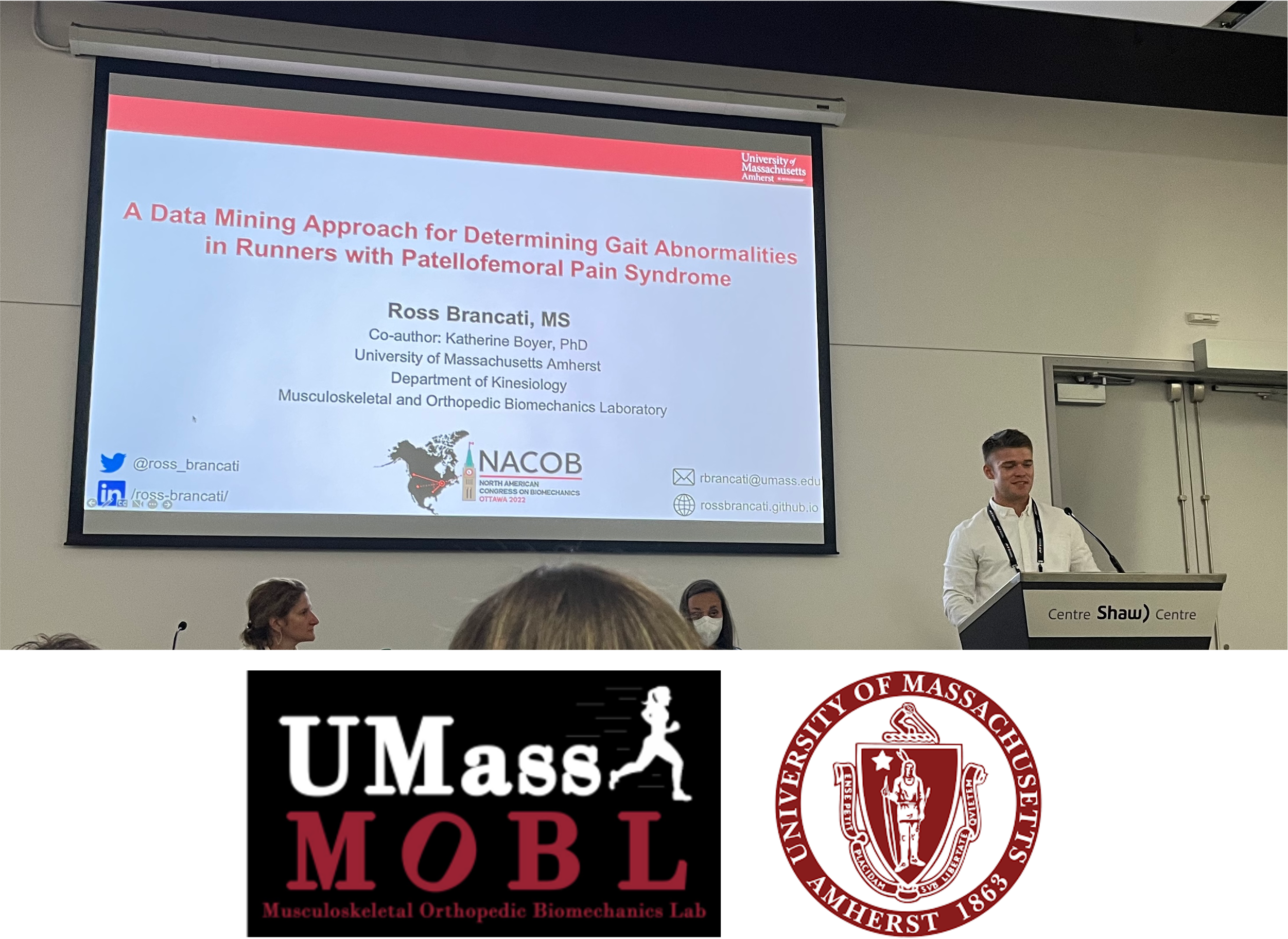
I successfully defended my dissertation in January 2025 and officially walked in May. My project explored identifying and classifying patient specific injury mechanisms and factors related to development of patellofemoral pain using unsupervised and supervised machine learning models.

Cross validating machine learning models by leaving out all observations from a single subject. A great approach for small sample sizes and multiple observations per sample. This post explains the approach and how to implement it from scratch in python.

Wearable technology such as inertial measurement units are useful for measuring movement. In this project, I used an open source dataset with signals derived from inertial measurement units to classify walking gait speed with a deep learning model.

An application of machine learning methodologies including dimensionality reduction and classification models to analyze the complex behavior of musculoskeletal injuries with a "systems theory" approach.
December 2025

